Showing posts with label politics. Show all posts

Thursday, March 05, 2009

CSIS: Disregarding International Law Since (at least) 2003

So this is horrifying, although I suppose not really surprising:

globeandmail.com: CSIS asked Sudan to arrest Canadian, files reveal

Mr. Abdelrazik is a political refugee who became a Canadian citizen in 1995. In 2003 he was arrested by the Sudanese authorities on the advice of CSIS. In prison for 11 months, he was tortured, and was interrogated by CSIS agents as well as US intelligence operatives. Finally released—because even the Sudanese authorities, well known for their disregard of human rights, could not justify holding him. He was rearrested in October 2005, and held for a further 10 months. At least one of those arrests was at the request of the Canadian government.

Throughout, the Canadian government not only denied Mr. Abdelrazik his rights under international law, including consular protection, they actively obstructed his return to Canada by refusing to issue him emergency travel documents, even after promising to do so as soon as he had arranged a ticket to fly home. They have seized his assets and stated that anyone who gives him money to pay for the ticket is committing a crime and will be charged under terrorist legislation.

The RCMP investigated Mr. Abdelrazik and exonerated him in NOVEMBER 2007. He still can’t come home.

Think Maher Arar was a one-time mistake? Think again.

Monday, October 13, 2008

Rock the Strategic Vote

Go visit http://www.voteforenvironment.ca/

This online gem allows you to plug in a postal code and receive an analysis of whether your riding needs the boost of strategic voting to oust Harper's Conservatives, or whether the riding is so firmly ABC* that you can vote your heart.

Personally, I'm an avid ABC-ist, to the point that Jack Layton's ads make me cringe. The NDP will never form a national government, and when they try, and I mean alienate-CAW-and-demonize-Dion try, they practically guarantee vote-splitting and a resulting Conservative win. Unless you own stock in sweater-vests, this is bad.


So, why do I dislike Harper? It's not just because I'm generally a pro-choice, pro-same-sex-marriage, pro-social programs lefty. I didn't agree with the old Progressive Conservatives, but I didn't dislike them.

The Canadian Centre for Policy Alternatives has released The Harper Record, a look at some of our great leader's moves since he's been in office. The Scandalpedia is also an excellent reminder of why we need a change in government.

For a look at the Harper Conservatives' less-then-stellar economic record, check out this article from CUPE.

Personally I'm horrified that a man/cabinet/party which tried to subvert the Constitution might become Prime Minister again. Even after a succession of courts ruled that same-sex marriage was covered by the Charter, Harper's party put forward a motion--thankfully, defeated--to re-open the issue, and re-instate the law making same-sex marriage illegal.

In fact, the election itself has been called in defiance of Harper's own law setting a fixed election date for next year!

So, to recap: Harper is a liar and a hypocrite. He's anti-arts, anti-environment, anti-women's rights, anti-human rights, and anti-rule of law. Even if he were going to save us all a few hundred a year in taxes--which he is NOT--it would hardly be worth the risk of losing the rights and protections for which stand.


* Anything But Conservative. Also check out:
http://www.anyonebutharper.ca/
The Straight slate to stop Stephen Harper

Sunday, March 09, 2008

More settlements = less peace

Via the Beeb:

Israel approves settlement growth

To which I say: Oh, crap.

Granted, it's hard to look at building houses on the one hand, versus opening fire on students on the other, and say "Oh yes, the houses are definitely worse than the mass murder." Of course not.

On the other hand, the mass murder is obviously crazy. CRA-ZY. And ordered by bloodthirsty ideologues who are either fanatics or profiteers. The settlements, on the other hand, are the considered plan of a democratic government to de facto absorb disputed territory. They put civilians on land that may not be theirs to justify putting soldiers on said land which obviously agitates the other claimants to said land who then attack the civilians and are killed by the soldiers. I fail to see what this does besides raising civilian casualties on both sides.

As a fun aside, here is some interesting data on the casualties on both sides:

Year Palestinian Deaths Israeli Deaths Palestinian Injuries Israeli Injuries
2005 216 (52) 48 (6) 1260 (129) 484 (4)
2006 678 (127) 25 (2) 3194 (470) 377 (7)
2007 396 (43) 13 (0) 1843 (265) 322 (3)
Total 1290 (222) 86 (8) 6297 (864) 1183 (14)


From the UN Office for the Coordination of Humanitarian Affairs for the occupied Palestinian territory, via Wikipedia (numbers in brackets represent casualties under the age of 18).

Now if you'll excuse me, I have to go find a non-partisan peacebuilding organization to which to give all my worldly possessions.

In which I tell Serbia to get over it

Dear Serbia,

You lost. Get over it.

Hugs & Kisses,

Sarah

Okay, that's a teeny, tiny bit oversimplified. Nevertheless, I'm a tad bit baffled at the "debate" about the legality of Kosovo declaring independence, for a number of reasons.

1) This is really always a political question. I mean, we can dither about the legality of unilateral declarations, the Supreme Court can issue a decision on it (Reference re Secession of Quebec, [1998] 2 S.C.R. 217), but the fact of the matter is a state is a state if and when other states agree that it is a state, the anomaly of Taiwan notwithstanding. This is a political question, and you can't put the rabbit back in the hat later by saying it broke the rules.

2) As the international Covenant on Civil and Political Rights puts it:

1. All peoples have the right of self-determination. By virtue of that right they freely determine their political status and freely pursue their economic, social and cultural development.

And as the SCC noted in the Reference re Secession (at para. 114):

The existence of the right of a people to self-determination is now so widely recognized in international conventions that the principle has acquired a status beyond "convention" and is considered a general principle of international law. 

Self-determination is generally though of in two contexts, both involving the domination of a people by an outside force:

The right of colonial peoples to exercise their right to self-determination by breaking away from the "imperial" power is now undisputed...

The other clear case where a right to external self-determination accrues is where a people is subject to alien subjugation, domination or exploitation outside a colonial context. (Reference re Secession at paras. 133-34)

Clearly Quebec, which gets all sorts of free rides and special treatment from the Canadian government, doesn't fall under those categories. But I'm pretty sure Kosovo does.

Kosovar Albanians are a relatively homogenous national group living on a relatively discrete chunk of Europe who apparently cannot be part of Serbia without the two sides killing each other. Sure, there are examples of multi-ethnic states succeeding, but they have characteristics, like integration, or a supra-national identity, or most importantly, not killing each other. Both theoretically and functionally, Kosovo is a textbook example of why/how self-determination is so important.

3) How is this news to anyone?

Kosovo has been de facto seceded from Serbia since 1999, when the UN declared it a protectorate. Yes, there were attempts to negotiate a mutually acceptable status, but once they fell through, all bets were off. I don't think it says anything that the UN has yet to acknowledge Kosovo; I think they're basically being polite, to avoid the appearance of having instigated the whole thing. If I am surprised by anything, it is that it took this long for a declaration of independence to be made.

Saturday, March 01, 2008

Those of Us with Our Panties in a Bunch v. Mock Trial

As my caveat lector (right) makes very clear, I am not afraid of a good argument. In fact, given my vocation and, some would say, pathological inability to keep my mouth shut, I am more or less doomed to a life of debate. One of the most delightful manifestations of my contrarian nature is my staunch opposition to over-wrought complaints of injured sensibilities and the arch self-righteousness of special interest wankery. If I am a feminist, I am a small-“f” feminist, thank you very much. As proof, I offer a complete list of the last three things that made me as teeth-grindingly angry as I have been for the last week:

  1. The militantly feminist politics teacher who told me that wearing makeup was a betrayal of the “cause” and suggested we move to consensus government because it was easier on women
  2. The guidance counsellor who demanded that I had an obligation to take math and computer science because previous generations of women had fought for my ability to do so (apparently I owed them some Cs and Ds, although why they preferred to be paid in the currency of bad grades I’ve no idea)
  3. The lit professor who insisted that (a) cannibalism was good, and (b) that anything any person of British extraction had ever done was inherently evil (particularly perplexing given that she was a white Australian)

In short, I am astronomically unlikely to find something “offensive to women,” let alone to raise the issue. There is, of course, one major exception: when those arguing the counter-feminist perspective (some of them, I’m sure, quite convinced that they are being excellent little third-wave feminists) are so obviously missing the point that I despair for the rhetorical and analytical skills of my generation.

Now let me clear (somebody has to, I suppose): I take no issue with Mock Trial. Not having seen it, I cannot take issue with it. I know that many people on both sides of the debate invested enormous amounts of time and effort into the show, which by all accounts was 90% unimpeachable, at least under the terms of this debate. I’m told it was amusing; I’m told it raised $10,000 for charity. This is commendable, and it has nothing to do with this debate.

My concern, the issue to which I am sacrificing so much precious dental enamel, is the cultish attitude of those who have equated criticism of Mock Trial with betrayal of Osgoode, nay, of freedom of expression itself. To them I have but one question: Seriously?

While I sympathize with distrust of censorship, some counter-arguments have gone so far as to raise the spectre of Osgoode turning into a fascist police state where all free expression is quashed. While I admit there are days when these hallowed halls of learning strike me as dystopian, it is clear that the school is too committed to being Kafkaesque to waste time being Orwellian. Plus—thankfully—law students are mouthy little brats who would never let that happen. This is yet another straw man argument that ignores the issues.

There are legitimate counter-arguments to the positions (a) that a strip-tease is an entirely inappropriate feature of an official school event, in that it furthers the acculturation of the virgin/whore dichotomy in the legal profession; (b) that depicting a specific and identifiable student as an embodiment of the worst stereotypes of (attractive) female lawyers, namely that we sleep our way to the top, is not only potentially defamatory and unquestionably injurious to the target, but also harmful to the student body as a whole; (c) that any attempt to address a breakdown of institutional standards must go outside that institution to challenge the defensive groupthink to which any school or organization is prone; and (d) that serious breaches of standards which take place in a public and highly publicized forum are properly addressed in an equally public forum. But I haven’t heard any yet. Instead, I’ve heard a lot of arguments so heinously illogical that they deserve to be broken down into their component logical fallacies.[1]

Regarding “Come join the Cabaret…”

Mock Trial is, I think, best defined as a cabaret show. Cabaret as an art form is generally a bawdy, funny, sometimes vulgar intertwining of performances of varying calibre and has also traditionally been a venue for social and political satire and commentary. Mock Trial is very much along this vein. It is a cobbling together of the efforts of many different people into a final product that is meant to be entertaining, humourous, and racy, while simultaneously satirizing Osgoode, the legal profession and various notable personalities both at Osgoode and in the larger legal community.

The comment begins with masterful examples of both the bare assertion fallacy and begging the question. Since mock trial = cabaret and cabaret = good, mock trial = good. This is also a nice specimen of the weak analogy. It then moves on to a simultaneous ad hominem attack/use of loaded language, by dismissing the complainants as part of the “legacy of melodrama that is Oz” who are “getting their knickers in a knot.” The mischaracterization of the debate continues, as we find out that the subject of the knicker-knots in the mere “’raciness’ and ‘inappropriateness’ of some numbers.” I would classify this as abuse of quotation marks. No one is concerned that some of the Mock Trial performers showed a little ankle, it is how they did so and the likely consequences that have our unmentionables all a-tangle.
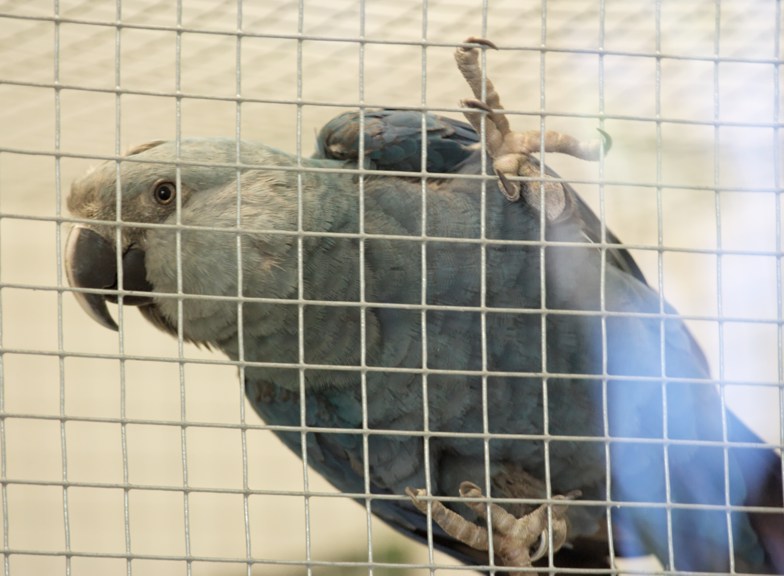
The comment then moves on to a rhetorical device so rare I feel luckier to have witnessed than if a Spix’s Macaw landed on my shoulder. Having established—or rather, asserted—the Mock Trial-cabaret link, the article goes on to compare criticism of Mock Trial to censorship by the Nazis (the author’s disingenuous and exclamation-pointed demurral aside). Indeed, it is the rare reductio ad hitlerum, not seen in the wild since the mid-twentieth century.[2] Both a false analogy and an attack ad hominem, this particular logical fallacy is too frail to survive the arched eyebrows of its interlocutors. It demands the question, once again: Seriously?

The article moves away from Teutonics and on to a reaffirmation of the previously discussed bare assertion/begging the question: “At Osgoode, Mock Trial is one of the most apt forums in which to criticize the legal regime in which we find ourselves.” This neatly sidesteps the fact that, (a) if Mock Trial is that important to legal discourse at Osgoode, then perhaps we should take in our shingle and go home, and (b) that the impugned elements of the show had nothing to do with the “legal regime”. Then the article moves on to a fallacy of relevance implicating Jonathan Swift as a hypothetical supporter of Mock Trial’s right to say anything, however defamatory or sexist. My counter-hypothesis is that Swift is currently turning in his grave like Pulsar B1257+12. While the article may be right that “satire gets a point across far more effectively than the clearest analytical writing,” it sadly fails to prove that Mock Trial is satirical.

Satire must have an object. It must satirize something. It is a manifestation of irony. So then, what was the object of the satire in the impugned parts of Mock Trial?

**cricket noises**

Ah yes, that’s right, there was none. To its credit, the article does explain the use of non-satirical humour in cabaret:

In terms of non-satirical content, such as plain old “toilet humour,” gratuitous swearing, or sexually explicit content, I would like to point out three things. First, cabaret has always included these aspects of entertainment and humour – it is part of the genre. Second, the performers in Mock Trial are adults, who are capable of making decisions about what they are willing to take part in. They are not goaded, paid or tormented into participating, and what appears on stage is therefore not exploitive of them.

I would also like to point our three things: First, appealing to the authority of cabaret is unhelpful because no one has actually established that this is an apt analogy. Second, defending Mock Trial on the basis of the performer’s personal agency is missing the point by a margin of error comparable to New Coke. It is a non sequitur; nobody is arguing that the dancers or actors were forced to do something exploitative. The problem is the loss of agency on the part of other women in the Osgoode community. Third, while I’m glad to hear that Mock Trial doesn’t pay or coerce its participants, the point is irrelevant to the current debate.

In the last four paragraphs, the article moves into an analysis of the freedom of expression interest supposedly threatened by those of us with our lingerie in a barrel hitch. This is purports to be the crux of many of the arguments for Mock Trial’s impunity, and it is defeated only by its myopic hypocrisy.

I would agree that it is good advice to not “assume that because you were morally offended by something in the show that everyone was or should be offended.” However, it is likewise true that one should not assume that because they were not “morally offended,” no one else would be either. It is entirely true that “that kind of thinking that leads to moral arrogance as well as a lack of dialogue between divergent viewpoints.” Such moral arrogance could include the un-argued assumption that support of freedom of expression is a carte blanche for anything, no matter how harmful. Blackface? Punch and Judy? Snuff films? Why not?

Now, I clearly don’t agree with that point of view, especially in this context. The medium is the message, and if the medium is a school-supported, firm-funded, institutionalized performance which paints women as sexualized being to the exclusion of other traits, then the message isn’t “women are just sexual”—which would be bad enough—but “Osgoode and the firms agree that women are just sexual”. But perhaps I could “agree to disagree”, had the article not concluded with an admonishment that the complainants had expressed their discontent wrongly. In short, Mock Trial can say what it wants because freedom of expression is paramount, and if you don’t like it, shut your face. Charming. And that’s not the worst of it.

Regarding “The beauty of freedom and feminism”

This article avoids any particularly egregious rhetorical abuses by the simple use of wishful thinking, and a troubling misunderstanding of what it is to be feminist. It begins where the previous one left off by indulging in rampant hypocrisy, ironically by misusing the word “hypocritical":

The first issue is between the student and the producers. Anyone who has spoken on behalf of this student to other organizations or to the school newspapers is simply hypocritical in their actions. If this student chooses to handle the issue personally, then that should be respected. Using the student to advance your own grievances is discourteous. Regardless, the skit in question in no way TRUTHFULLY depicts any student in this school and is just a farce of a fictional situation.

From this I glean several troubling themes. We should not, apparently, support members of our community who have been maligned. We should also not use blatant and troubling evidence of a problem in the institutional culture of the school to illustrate that problem. I confess that following these suggestions would make it frankly impossible to be a lawyer, to advance cases and use evidence, particularly when I agreed with my clients and their cause.

Also, the statement that there was no targeting of a student is obviously untrue, however sincere the author may be. I can’t believe—or, perhaps, refuse to believe—that all or even most of those who contributed positively to Mock Trial were aware of the situation and untroubled by it.

The article continues:

The second issue a few people had with the show is the alleged “misogynist” depiction of women. "is is something that falls under the headings of “taste” and “censorship”. I would be dishonest if I said every skit showed women in the best light. However, that is my opinion. I am entitled to that opinion just as women are entitled to be smart and sexy, even overtly sexual if they choose. Women can even be bitchy and sarcastic in their skit, a la moi. This is the beauty of freedom and feminism! You can be want you want to be. You can be criticized, but you should not be stopped.

This is troubling, once again in that missed-the-point, fallacy of relevance way. First Wave, Second Wave, Third Wave, Post-, or reluctant feminist, there is one thing we can all agree on: that individual women have a right to self-determination. Women’s identities should not be determined solely by the external culture. Women should feel free to express their sexuality, their “sexyness” howsoever they choose. So, why then is it problematic for Mock Trial to feature stripping female lawyers and young women lawyers prostituting themselves?

Because the dance was a depiction of young female lawyers in general, and because the skit was a depiction of a young female lawyer in particular. It is not the behaviour that calls for criticism, but rather that said behaviour is a public representation of a stereotype that many of us have had to fight against. It is also screamingly ironic that the skit ridiculed that which the dance purported to celebrate.

In short: Worst. Third-Wave Feminists. Ever.

For those who were offended by the show, you are entitled to voice your own opinion. You could address the issue with the producers or in the Obiter, but to go so far as to contact corporate sponsors is preposterous! The sponsors come and see the show; therefore, they can personally address any issues they have with the producers or the school.

Again, it is interesting how Mock Trial should be immune from criticism, but its critics are not. We are “entitled to voice” our “own opinion”…at the time and venue, and to the audience, that is least likely to respond. Please read Committee for the Commonwealth of Canada,[3] then get back to me.

The article concludes on a morass of appeal to emotion (they’ll cancel our beloved Mock Trial!), ad hominem attacks (you hate charity!), and an amusing poison pill: “Seeing our peers’ talents is secondary to the charitable contribution.” Since that’s true, and since Mock Trial appear incapable of raising money without particularly unfunny and damaging portrayals of members of our community, maybe we should quash the whole thing and try for something less mean-spirited?

Regarding “In defense of Mock Trial”

I’ve read this article several times now, and while I am more than willing to point out its flaws, I shall make the caveat that, while I believe this is a particularly inept satire of the complainants, it may in fact be an incredibly clever satire of the respondents.

I have a disability. It’s genetic, so there’s not too much I can do about it. My doctor tells me that my chromosome five is abnormally short, and as a result I don’t have a sense of humour.

To begin with, this article could easily have kept its basic premise without invoking chromosomal abnormalities. I don’t find Le Jeune’s syndrome[4] particularly amusing, and I would caution the author that a quick Google might have prevented him from mocking an actual and tragic genetic disorder. I’m also discouraged that there was no fact-checking on the part of the editors.

Having begun with retards, the article moves on to racism.

Having this disability is usually fatal in most societies. I’ve heard reports that in some island cultures, children born with this disability are actually thrown off cliffs, to the mirthful approval of the community. I think they did this in ancient Sparta as well, although this is still a point of debate among contemporary academics. In other societies, those born with this disability and it impossibly difficult to mate with the opposite sex. As a result, they usually relegate themselves to living in caves. Surprisingly however, my disability has never been an obstacle for me in Canada – thanks primarily to our culture of ultra-political sensitivity.

Anhedonia and over-sensitivity are then conflated:

I’ve recently discovered that my disability is actually an advantage in many circumstances. By not being able to laugh, I have the luxury of finding offensive just about anything. Any mention of sexuality? Obviously sexist. Allusion to ethnicity? Obviously Racist. Satirical suggestion? Most definitely discrimination. I also find that most people are afraid to disagree with me. Those who are not, I usually like to portray as colonial supremacists. This usually does a good job of shutting them up.

First of all, this “joke” lacks continuity. Lack of sense of humour does not make one jump to conclusions like this. Again, the author could have claimed to have the fictional illness Hypersensatus politica without dragging people with serious medical problems down into the muck with him. Second, he paints the complainants as malignant narcissists who cannot abide any criticism.

The irony is so thick only Paul Bunyan could dent it. And yet the ad hominem attacks continue:

Being able to point out offensive material has now become second nature. It’s a knee-jerk reaction that doesn’t really require any higher cognitive function. I no longer ask myself why I am offended, I am merely comforted by the fact that I am. And besides, I find it’s a great way to get people into trouble, and also to set the bar so incredibly high that people around me are perpetually afraid of what to say. I like it when people respect my values. I call it a subtle form of coercion.

The complainants are apparently irrational (and possibly stupid), textbook cases of narcissistic personality disorder, and apparently dabbling in Munchausen Syndrome by Proxy or at least an overdeveloped sense of Schadenfreude.

Continuity breaks down again when the narrator states: “My latest pet peeve are school performances. I really think they just aren’t funny anymore.” Um, if you were born without a sense of humour, when did you know they were funny? When satire is good, it’s very, very good, but when it’s bad, it’s this article. I believe Jonathan Swift’s rotational velocity is approaching light speed.

I’ll spare myself the analysis of the next two paragraphs, which continue the theme of narcissism. The article then concludes with yet another bizarre mischaracterisation of the issues:

I also don’t see the point in opening up lines of dialogue with those who have offended me. It’s much easier just to tell on them. I guess this is something I learned from elementary school. If I can’t deal with an issue, I seek higher authorities to resolve the problem for me. It makes me less accountable. In truth, I’m not sure if I’m in it to change the opinions of those who I think are offensive. I’m more interested in my own emotional catharsis. It’s easier to complain than to explain.

To those critical of the way the complainants made their complaint as not “opening up lines of dialogue,” I’d like to point out in as few words as possible the flaw in your argument: it’s wrong. It’s just so, overwhelmingly, obviously wrong that it almost doesn’t bear analysis. The complaints didn’t move this debate from the private to the public sphere, because it was already in the public sphere. Even in the Excalibur article, both sides were given the opportunity to express their opinion, and it’s hardly our fault that some people just tried to bluff their way to a defence of the indefensible. To argue that Mock Trial should not be called on its errors for the sake of abstract and unanalysed claims to “humour” and “freedom of expression,” while simultaneously berate its critics for “telling on” it is so painfully illogical that I lose a few neurons every time I contemplate it. If Mock Trial is blameless, than complaints cannot harm it. But if Mock Trial is blameless, then why hasn’t their been a single articulate statement in its defense? If untempered freedom of expression is good, then why are we not free to express our problems with the show?

Now if you’ll excuse me, I have to go batten down the hatches against the inevitable backlash.


[1] I won’t criticize any of the authors for their use of appeal to ridicule, since it’s one of my favorite rhetorical tools. I can’t blame anyone for trying to be funny—I can only blame them for failing.

[2] http://en.wikipedia.org/wiki/Reductio_ad_hitlerum.

[3] v. Canada, [1991] 1 S.C.R. 139.

[4] http://www.nlm.nih.gov/medlineplus/ency/article/001593.htm.

Friday, February 22, 2008

In which my long-dormant feminist side speaks out

Okay, brief intro to a sordid tale:

Osgoode has an annual charity review called Mock Trial. Mock Trial is usually pretty racy. This year, Mock Trial took an unfortunate turn from "racy" into "what the hell...that's inappropriate." Friend of mine complains to York University's student paper, resulting in this article: "Producer shows no concern over ‘misogyny’" Quote:

     “There were a couple of scenes in this year’s performance that were unacceptable and downright offensive,” she said.
     One such scene, according to Brierley, involved female law students “gyrating” on chairs to the song ‘Buttons’ by the Pussycat Dolls.

...

     “There was another scene which portrayed a female law student who was essentially down on all fours, pretending to give [oral sex] to somebody who was playing a partner in a downtown Bay Street law firm,” she said.
     “The reason for which this law student was doing this was to gain funding for an environmental program.”
     Brierley claimed the female law student depicted in the skit was also meant to resemble an actual student.
     “As it turns out, the [female] character that was being portrayed was actually modelled after a specific individual at Osgoode. And although no names were mentioned, everybody that I spoke with after the performance knew exactly who it was referring to.”
     Elizabeth Martin*, another Osgoode student, said she knows the student who was being depicted personally, and that although no names were mentioned, the skit referred to the student through personal details known to the Osgoode community.
     “They made sure they made reference to [those things] in the opening of the skit to allude to her. And from there, it went on to this degrading act,” she said.
     “She’s deeply humiliated. She doesn’t even want to attend school.”

First of all, from all accounts it was meant to depict this person, and there was a striptease, so the whole "Brierley claimed" thing is misleading.

The producer contacted not only denied that the skit was inappropriate in any way, but also denied personal responsibility, or responsibility to the student body:

     [James Butlin, one of the show’s producers, said] “We’d certainly not apologize. Our show raises almost $10,000 for local charity and involves over 15 percent of our student body, and the response to our show has been excellent from all but these people that I hear about now.”

I...what? WHAT?! Goddammit man, if they'd only owned up to how totally NOT CRICKET that was, we would have been okay, I think. But instead, people went mental, siding with either "Mock Trial" or "Alyssa" (as if those two sides were mutually exclusive, as if Alyssa some sort of irrational hate-on for Mock Trial in general).

My favourite part, and by favourite I mean most-rage-inducing, is that people are angry she went "outside" the school. As if Osgoode is sort of sacred closed community and by "snitching" she broke some sort of unspoken rule. That is patently ridiculous. Osgoode is part of York--sorry folks, but it's true. Also? Osgoode has this bizarre secret-society mentality that allows institutional biases and groupthink to reign; those who don't buy in only have to survive three years of it, so we cope. If you think something is a serious problem, you have to go outside the school.

The editor of Obiter Dicta, the Osgoode paper, said in the most recent issue:"This is essentially a private affair that has unfortunately been played out publicly..." which is simply untrue. If someone had said something offensive is, say, a class, that might have counted as private. But Mock Trial is a publicly advertised show. Public sexism and inappropriate behaviour requires public discussion and public apology.

I will now quote the entirety of Alyssa's comment in the most recent edition of Obiter, because I think it's cogent and eloquent and deserves to be available in an indexed/html sort of a way:

While it is noble that so many Osgoodians spend months preparing an entertaining production in order to raise money for charity, the content of some of Mock Trial last week was troubling to say the least. I would like to preface the comments I am about to make by saying that I commend the dedication and hard work that so many student colleagues have spent on this performance. There is clearly a great deal of talent within the halls of Osgoode. My comments here and those that I made to the Excalibur are not meant in any way to undermine the efforts put forth by the vast majority of participants in the performance. It is unfortunate, however, that the production as a whole has been tarnished by the poor judgement of a few people who felt the need to include questionable material. In a profession where women struggle to be taken seriously, one has to wonder why students – many of whom were female – are perpetuating the very gender stereotypes that make it difficult for women to succeed and why their so-called progressive institute of higher education is allowing this to happen.

Two skits in particular were offensive: one with female students performing a chair dance to the lyrics “loosen up my buttons, baby,” and another depicting a female law student crawling on the floor and simulating oral sex on a male lawyer with whip crème and knee pads. As for the sexually charged dance scene, I fail to see the value in inviting the public to our school so that they can see female law students dancing in a sexual manner on chairs. What a woman does on her own time is her business. What people do at a public event in the name of Osgoode Hall becomes everyone’s business. I for one do not appreciate being associated with this type of performance given that I face enough problems as a young female trying to succeed in a field dominated by men and male oriented career norms.

Most troubling about the performance, however, was the second skit mentioned above. The vast majority of my criticism rests here. While the dance was inappropriate, the now infamous “blow job” scene was degrading, offensive and I would even go so far as to suggest that it constitutes sexual harassment. Aside from being completely inappropriate at a public event attended by families, professors, student colleagues and friends, this skit maliciously targeted a specific female student in a manner that can only be understood as an attempt to humiliate this individual and tarnish her reputation. Although no names were mentioned in the show, it was clear to most people that I have spoken to since the performance last week exactly who this character was supposed to be.

Both of these scenes were offensive in their portrayal of women in a profession where women have had to fight for respect and the right to be taken seriously as intelligent professionals. The portrayal of women in this manner also undermines the ability of female students at Osgoode Hall, such as myself, to feel that they are earning an education in a safe space where they are respected as intelligent and capable individuals rather than sexual objects. What’s worse is that this event had the school’s name all over it, suggesting that this type of depiction of women is sanctioned by Osgoode as an institution.

Finally, the fact that there were so many people involved in the production implies an institutional culture at this school that sees no problem in treating its female students in this manner. Presumably dozens of students witnessed rehearsals of Mock Trial practices and dress rehearsals and yet the performance went on as is – three times. This is clearly a much bigger and more systemic problem. The fact that many knew about the offending performance and no one felt compelled to remove this content is perhaps the most disturbing aspect of this entire story.

This should never have happened. The Mock Trial producers should never have included these scenes and the Dean – who performed in the Wednesday night performance– should never have allowed this to continue for two additional evenings. These Mock Trial scenes have embarrassed the school and personally harassed and degraded a member of its community. For the first time in my life, I am embarrassed to be affiliated with this institution. I was so outraged, in fact, that I contacted the Excalibur so that they could report on it. They ran the story on the front page of this week’s edition. When asked to comment, one of the producers remained unremorseful, as if doing something for the purpose of raising money for charity gives them a carte blanche to treat people in such a degrading manner. As for the notion that the offending scene featured a “fictitious character,” that is simply not true and everyone knows it. Claiming that it was not an actual representation after the fact does not change this.

I have been challenged – privately, by members of the Osgoode community and my friends – for my decision to complain to the sponsoring firm so that they could “raise these issues with the producers of Mock Trial and to either pull funding for next year’s production or make it conditional on the content of the production being less offensive to women and other vulnerable groups.” Note that this is a direct quotation from the letter I sent to Cassels Brock; I do not think this is an unreasonable request. People have pointed out to me that this may have an impact on the ability of Mock Trial to secure funds in the future for its charitable aims. While I understand why some may be concerned, perhaps those same people should be instead complaining to those responsible for this, rather than the person tired of this kind of behaviour at Osgoode. I have received numerous letters of support in the past day, from total strangers thanking me for speaking out publicly about this issue. Clearly I am not the only one who feels offended by what happened last week.

Make no mistake: if Osgoode loses funding in the future for Mock Trial, it is not because a female law student got mad as hell and raised a fuss, but rather because there was a failure of judgement and oversight at all stages of the process. If people don’t want their dirty laundry aired, then perhaps they should keep their clothes clean. I don’t think it’s appropriate to be quiet about this simply because this is a charitable event and it reflects poorly on the school. It should. We have to face the consequences as a community for allowing this to happen and not run for cover. This is indicative of a systemic problem and a culture at Osgoode that makes this kind of behaviour possible. There are plenty of ways to raise money for charity in an inclusive and respectful manner and defaming a member of our community in a (mostly) otherwise entertaining production is not one of them. (emphasis mine)

Now, I applaud Obiter for including a number of pro/con comments in this issue, and I only have serious concerns with one: "Come join the Cabaret…" by Sheila Hyatt. The comment states: "Mock Trial is, I think, best defined as a cabaret show. Cabaret as an art form is generally a bawdy, funny, sometimes vulgar intertwining of performances of varying calibre and has also traditionally been a venue for social and political satire and commentary. Mock Trial is very much along this vein."

Okay, I'm agree so far. But the comment continues: "I’ve heard mostly positive comments about the show. Naturally, however, this is law school, and in keeping with the legacy of melodrama that is Oz, I have also heard murmurs that some people are getting their knickers in a knot over the 'raciness' and 'inappropriateness' of some numbers."

Again: What? This isn't about a couple of prudes in a tizzy because someone showed some ankle, for heaven's sake.

The comment then raises the similarity of Mock Trial with the cabaret as depicted in the film Cabaret, stating: "The film deals with cabaret in Germany during the Nazi rise to power. Between 1933 and 1945, the art form was essentially “sanitized” due to Nazi repression of social and political criticism, as well as a desire to exert greater control over public morality. Clearly I am not saying that those who are worried about the content of the Mock Trial show are repressive, fascist, racist, dictators!"

HAHA, CLEARLY! My God, we've actually gotten to a use of reductio ad Hitlerum. (I suppose Godwin's law fits too.)

The major problem for me is that I agree with much of this comment, if it were applied to different circumstances. The statement that: "I would like to point out that, as anyone who has studied Jonathan Swift can tell you, satire gets a point across far more effectively than the clearest analytical writing." So true! And that: "...don’t assume that because you were morally offended by something in the show that everyone was or should be offended. It is that kind of thinking that leads to moral arrogance as well as a lack of dialogue between divergent viewpoints." Yes, yes!

But of course, the comment misses several major points. Like the fact that these differences of opinion aren't about opening a progressive discourse, but about a series of ad hominem attacks that the comment itself has participated in (seriously? Nazis? SERIOUSLY?). Also, the striptease was sort of a side note, but was nevertheless problematic not because it was "racy" but because of the way it portrayed a group of students. Would it be okay for a skit to portray any other group by reference to a single, generalized stereotypical characteristic? Hell no.

Another point is that satire and parody have an object. Had the dance number been contextualized, even briefly, it might fit into this category. Male and female students stripping as the only way to pay gargantuan tuition. perhaps, or a sexy dance choreographed to a recording of a boring lecture set to hip-hop music. As it stood however, the only message of the piece was "SEXY DANCING".

The fact that these two skits (mainly the one consisting of a personal attack) made it into Mock Trial concerns me a little. The fact that half the Osgoode community seems hell-bent on attacking the whistle-blowers is, to my mind, far far more alarming.

Friday, February 08, 2008

Oh for Pete's Sake, Chill Out on the Archbishop of Canterbury

A few days ago, Rowan Williams, the completely sane Archbishop of Canterbury (i.e. the head of the Anglican Church), gave a speech on civil and religious law in which he backed the inclusion of some sharia law provisions into British law, similar to statements he had recently made in a BBC interview.

Cue international freak-out.

His actual statements include:

For example, Muslims could choose to have marital disputes or financial matters dealt with in a Sharia court.

He says Muslims should not have to choose between "the stark alternatives of cultural loyalty or state loyalty".

I defy you to find fault with that.

He also said, quite rightly:

He stresses that "nobody in their right mind would want to see in this country the kind of inhumanity that's sometimes been associated with the practice of the law in some Islamic states; the extreme punishments, the attitudes to women as well". ...

"There's a place for finding what would be a constructive accommodation with some aspects of Muslim law, as we already do with some other aspects of religious law."

So of course, the UK government and numerous commentators have decided to go completely snakey, shrilly insisting that there is no law but law, and the UK government is its creator, for all Brits.

Which is just not true, of course. Jewish and Muslim arbitrators exist and are regulated to deal with some family/civil law issues.

One of the main problems is that Muslim religious marriages are not recognized, requiring Muslim couples to register a civil marriage as well. This is not the case for most other groups' marriages. Because of the confusion and double standard, people who believe themselves to be protected by civil family law are not.

It was probably naive of the Archbishop to drop such comments into the already murky Euro-American debate about the merits and contours of multiculturalism without having a more concrete stance from which to argue. However, I find it incredibly irritating that the man is being attacked for suggesting that the UK (a) acknowledge that sharia is going on "behind closed doors", and (b) promoting pluralism and inclusion. All the pompous "experts" sputtering that no one should be excepted from the law because of their religion -- and alluding to polygamy and corporal punishment when they do so -- are indulging in a shamefully self-serving straw-man argument. Not only didn't Williams say that, but he explicitly said not that. If you aren't willing to debate the actual issue, please be quiet.

And even if Williams was making an absurd suggestion, he has no power to implement it. He's the head of a Christian sect, for heaven's sake. Everybody needs to simmer down now.

Wednesday, November 28, 2007

On Waterboarding

Via Joe. My. God., Via - Dan Savage.

"[If] the Bush administration didn’t think [waterboarding] was torture, they ought to do some personal investigation. Someone in the Bush family should actually be waterboarded so they could report on it to George. I said, I didn’t think he would do it, but I suggested Jenna be waterboarded and then she could talk about whether or not she thought it was torture." - Stephen King to Time Magazine.


Tuesday, October 23, 2007

Security Certificate Redux


TheStar.com | Canada | Ottawa tackles terror laws

It looks like Canada is adopting the British system. I suppose its an improvement, if you ignore the whole "depriving people of their basic civil rights" thing.

Thursday, September 27, 2007

BBC: "Couple stand by forbidden [incestuous] love"

I know I've posted about this before, but it was revived this week due to Slate's sex and sexuality special, and I can't help being fascinated by it. The story is here.

The thing that attracts/repulses me about this how it tests my small-l liberal impulses. They're not exactly hurting anyone by having the relationship, except the kids (two of the four have special needs, and apparently there's a 50% chance of that with siblings). But what if you and your non-related partners were both carriers of a genetic disease, and there was a 50% chance your children would inherit? Should the state prevent you from having kids, much less getting married?


On a related note, I was looking up autosomal recessive disorders  for the purpose of understanding the above, and I came across this nugget of trivia: heterozygote advantage: certain pathological genetic disorders can help protect you from other diseases! Apparently being a sickle-cell anemia carrier brings enhanced protection against malaria, and being a cystic fibrosis carrier may help protect against cholera (not the infection, but the damage it does) and tuberculosis.

And in case you doubt how helpful an extra protection against malaria would be, the July 2007 issue of National Geographic has this to say:

It's endemic to 106 nations, threatening half the world's population. In recent years, the parasite has grown so entrenched and has developed resistance to so many drugs that the most potent strains can scarcely be controlled. This year malaria will strike up to a half billion people. At least a million will die, most of them under age five, the vast majority living in Africa. That's more than twice the annual toll a generation ago.

Compare that to the WHO 2006 data on HIV/AIDS:

...an estimated 39.5 million people are living with HIV. There were 4.3 million new infections in 2006 with 2.8 million (65%) of these occurring in sub-Saharan Africa and important increases in Eastern Europe and Central Asia, where there are some indications that infection rates have risen by more than 50% since 2004. In 2006, 2.9 million people died of AIDS-related illnesses.

HIV/AIDS = 4.3 million infections   Malaria = 500 million infections

HIV/AIDS = 2.9 million deaths   Malaria = 1 million deaths

And bear in mind, there is no cure for HIV/AIDS, whereas there are plenty of cheap malaria drugs. It can become a lifelong, chronic condition, but it can also be fought off by the immune system alone. So all in all, as horrifying as the HIV/AIDS epidemic is, malaria is worse.

Saturday, September 08, 2007

Again with the veils?

Apparently there's another dust-up brewing in Quebec about a decision to allow women to vote while wearing a niqab or a burka/burqa, as long as they have two pieces of ID and another voter to vouch for them.

Visual aids:

Totally random aside...why are burkas always such screamingly bright colours?
ANYWAYS: I find it interesting that no one responded to Mohamed Elmasry's straight-forward solution:
Mohamed Elmasry of the Canadian Islamic Congress said that Muslims aren't asking to be allowed to vote with their faces covered, and that niqabs are a rarity. He said veiled women would have no problem removing a niqab before a female voting official for identification purposes.
I guess that's too simple, eh? The thing is, voting takes place in a public forum, which means if a woman removed her veil it would not only be seen by the elections official, but probably also by a dozen or more other voters waiting for their turn.
Another thing not mentioned is the whole how-important-are-ID-checks-really angle. As anyone who had underage kids in college knows, visual ID checks are sketchy (interesting article on eyewitness unreliability here ). And the elections officials are generally volunteers...trained, competent, but not experts, n'est pas?
Previous to-dos about veiled drivers being pulled over are, I think, a different issue. That's time sensitive, and there's no way to effectively get past the need for immediate identification in those circumstances.
The BBC has an interesting breakdown of the pros and cons--not of veils as a practical matter, but whether or not they are required:
Say to the believing men that they should lower their gaze and guard their modesty: that will make for greater purity for them: And Allah is well acquainted with all that they do.

And say to the believing women that they should lower their gaze and guard their modesty; that they should not display their beauty and ornaments except what (must ordinarily) appear thereof…

Qur'an 24:30-31

As many have pointed out, if women are totally covered, why should men lower their eyes? and so on. Basically, my reading of the doctrine is that modestly is required, hijab is usually considered a part of modesty, but burkas and niqabs are not called for in scripture or Hadith and can theoretically be done away with. To me, this indicates that if a woman chooses to wear a niqab or burka, she may, and the fact that it makes people uncomfortable is not a good reason for banning it or making it functionally impossible. However, there will be circumstances in Western life where there are no work-arounds, and no woman should be (or could be, according to scripture) considered immodest for cooperating with police at those times.

Wednesday, August 29, 2007

Rewriting History

The Globe & Mail reports: "Fighting words rile historians: Museum's decision to adapt text sets dangerous precedent"

Might this actually be the most idiotic thing I've ever heard? Well no, of course not... but it is seriously obnoxious.

According to the article:


The fight over the 67-word panel, titled An Enduring Controversy, erupted shortly after the Canadian War Museum opened in May, 2005. A group of veterans objected to its saying that "the value and morality of the strategic bomber offensive against Germany remains bitterly contested," and to its contrasting 600,000 dead with the statement that "the raids resulted in only small reductions of German war production until late in the war."
So the museum is in negotiations with veterans to re-word the panel, to be "more respectful" to those who died during the campaign.

Nothing I've seen mentioned about the controversy claims personal responsibility on the part of the RAF pilots and crew who took part in the bombings. What is controversial is the Allies' decision to firebomb Dresden, resulting in 25,000 dead, and arguable claims of a war crime. The point was not to belittle those who served in WWII, but to demonstrate that the Allies were also guilty of the deaths of civilians, of misjudgment, of disregard for humanity. To simply add information pointing out the casualties on the side of the Allied bombers would be one thing, but to reword the whole exhibit to de-emphasize the controversial and historically significant slaughter is more than irresponsible, it is unacceptable.
The article adds that another controversy is brewing:

One, the National Association of Japanese Canadians, says that the war museum's version of the internment of Japanese Canadians underplays the racist and economic forces behind the internment; the NAJC also wants the museum to recognize that despite the treatment of Japanese Canadians, 150 volunteered to don uniforms and fight for Canada. NAJC president Grace Eiko Thomson met with Mr. Guerts four weeks before his departure.

Yesterday, Mr. Eaton said that the museum had been in touch with the Japanese Canadians (Not recently, according to Ms. Thomson). "Everyone's knocking on the door," Mr. Eaton said.

Frankly, I think this is a slightly different issue. As I said, I don't mind adding details; its when history gets edited out that my inner History major raises an eyebrow. Nevertheless, no museum should be constantly adjusting itself to political pressure.

On an unrelated note, the fact that I can't properly publish from GoogleDocs to Blogger is driving me crazy.

Saturday, August 25, 2007

Long time no blog...300 spoiler alert

So last Saturday I watched 300, the much-hyped, much-criticized film version of Frank Miller's graphic novel (full disclosure, I ♥ Frank Miller). Wikipedia has a good summary of the criticisms, which were many, ranging from the political implications to the historical inaccuracies. I think people who expect historical perfection from action movies need a roundhouse kick to the head, but it's always nice when they make an effort.

One thing which did amuse me was the throw-away comment about Athenians being "boy lovers," since Sparta was, I believe, downright famous for pederasty. The Guardian featured an article quoting a historian, Paul Cartledge, stating:

Few cultures have celebrated the naked male body in the way the Greeks did. But the Spartan king Leonidas refers to the Greeks as "boy lovers", suggesting they are decadent. The irony is that the Spartans were literally boy lovers: they incorporated a form of pederasty into their educational system, as a way of turning a boy into a warrior.

Zephyrus and Hyacinthus, beloved of Apollo

was a patron hero of pederasty in Sparta.

Attic red-figure cup from Tarquinia,

c. 490-480 BCE.

Another comment often echoed:

But the most controversial aspect of the film is the portrayal of the Persians. They look a bit like the Teenage Mutant Ninja Turtles. The real emperor Xerxes was not a 10ft-tall god-king with multiple piercings. I can understand why the Iranians are upset about this. However, I think they're wrong to assume that the film-makers are making a comment on the Middle East, simply because it takes a very long time to develop a movie.

This is exceptionally true. For one thing, the Greeks and the Persians? Arch enemies for centuries. And the story is a fairly central one to Western culture. So to link the current supposed "Clash of Civilizations" to the Battle of Thermopylae is pretty ridiculous. For one thing, the 4th century BCE Persians were extremely different from Middle Easterners in general and Iranians in particular today. For one thing, they wouldn't be Muslim for another millennium. Which sort of involved a paradigm shift. Also, the graphic design was done when Miller published the graphic novel in 1999, before the current conflict.

Xerxes version Frank Miller, left

version Zack Snyder, right

I suppose there might be a better argument to be made that the reaction to the film was influenced by the current "clash of civilizations," which is concerning. But that's a symptom of our time, not attributable to Miller or Snyder. In short, I can't agree with this comment from Slate reviewer Dana Stevens :

If 300, the new battle epic based on the graphic novel by Frank Miller and Lynn Varley, had been made in Germany in the mid-1930s, it would be studied today alongside The Eternal Jew as a textbook example of how race-baiting fantasy and nationalist myth can serve as an incitement to total war.

Stevens missed some key points of the film. For one, she says that the law is "whatever Leonidas wants", and "if Spartan law is defined by 'whatever Leonidas wants,' what are the 300 fighting for, anyway?" As evidence, she relates this tidbit:

When a messenger from Xerxes arrives bearing news Leonidas doesn't like, he hurls the man, against all protocol, down a convenient bottomless well in the center of town. "This is blasphemy! This is madness!" says the messenger, pleading for his life.

Which raises the question: did she watch the movie? Not that it's incredibly strong on plot, but there is more to the story. First of all, the set-up to throwing the messenger in the pit is a consequence of Leonidas's belief that one should not use the cloak of "messenger" to throw threats at his people and insult his wife. Was the pit an over-reaction? Well, duh. But Leonidas is clearly a Punisher-style whackjob-maverick. Over-reaction is his forte. And as for the "there's no law" thing...uhm, a major plot-point of the movie is the fact that Sparta's "law" (as interpreted by venal, pseudo-religious perverts who have been bribed) is that Leonidas cannot defend his land and people, and so he has to try fending off the Persians with a tiny group pf volunteers.

Look, the movie is visually stunning and ideologically suspect. But if your getting you ideologies from movies based on Frank Miller graphic novels...there's a bigger problem.


Wednesday, July 25, 2007

And you went for THAT as a headline?

As I was checking out my sweet, sweet Google Reader this morning, I noticed this headline from CBC:

Sikh group slams immigration name change policy

The first bit of the article read:

A Sikh-Canadian group is slamming the long-standing immigration policy that forces people with the surname Singh or Kaur to change their last names.

Jasbeer Singh, of the World Sikh Organization, said the policy is incredibly out of synch in this day and age.

My god, I thought, seriously? Like, Ellis Island stylz? Freakin' ridiculous.

Then I read the rest of the article and my blood pressure dropped quite a bit. The actual issue is that, given how common the names Singh and Kaur are, people with those names are asked to give a second surname to distinguish their file.

Karen Shadd-Evelyn, a spokeswoman with Citizenship and Immigration Canada, said the reason for the policy is that it helps officials with the paperwork and allows them to identify people's files quickly, efficiently and accurately.

"You can imagine you wouldn't want your file to be confused with someone else's," she said.

...

Shadd-Evelyn said that while the department recognizes the tradition of having the names Singh and Kaur, it's their understanding that it is already a common practice for people in the Sikh community to have a third name.

"Generally, when we ask for that, they are accustomed to that and are used to providing a third name," she said. "They have it. It's not something that they're just making up on the spot."

Okay, well, both sides are being a little stupid I think.

According to this wikipedia article, there isn't a huge panoply of traditional Sikh names. The CBC article seconds that:

Singh and Kaur are common names in the Sikh community. In a tradition that began more than 300 years ago, the name Singh is given to every baptized male and Kaur to every baptized female Sikh. There are millions of Singhs and Kaurs around the world.

As someone who works in a doctors' office, and has worked with refugee and immigration files, I can tell you that even in small scale, repetitive names are a disproportionate complication. Also, families where the children are all named after the mother and/or father, and so on. Although I couldn't find a reference for this, in my own experience the Roma tradition of wives taking on their husband's given names is a particular hassle (paperwork-wise--I'm not criticizing any of these practices per se, but I do know they create administrative difficulties). So I suppose I have some sympathy for the paper-pushers at CIC who have to deal with this. According to StatsCan, almost 300,000 Southern Asians came to Canada between 1991 and 2001, so that's about 30,000 per year (about the population of Orangeville), and I doubt it's gone down much. Wikipedia claims there are about 600,000 Sikhs in Canada. That's a lot fo Singhs and Kaurs to sort out.

That said? This is exactly the kind of problem agencies like CIC are supposed to be able to sort out. For one thing, immigrants and refugees are assigned file numbers. Also, the way they've presented the issue to immigrants and sponsors does not match what they told CBC. The article included a link to a sample of the type of letter Citizenship and Immigration Canada sends out. The letter requests:

ORIGINAL passport for yourself after getting your surname endorsed on it. ...Please note that your surname must be endorsed on your passport. The names Kaur and Singh do not qualify for the purpose of immigration to Canada. [emphasis added]

Worst. Phrasing. Ever. Come on now, people. That really does sound like "change your name or no Canada for you--P.S., we are racist."

Frankly, I can't believe this is only coming out now.

Sunday, May 20, 2007

Dear United States: What on earth are you doing?

BBC NEWS Entertainment Moore courts Cannes controversy

So Michael Moore made a movie about the American healthcare system. And he filmed part of it in Cuba. Specifically, he took 9/11 rescuers to Guantanamo to compare the healthcare detainees receive.

And now he's being threatened with jail time and the confiscation of his film for going to Cuba without a permit.

Question: do the American authoritites read newspapers? Like, ever? Do they not have internet access? Because they appear to be ignorant of a few key facts, like the fact that everyone else thinks they're bizarre ban on Cuba is childish, or that silencing a film-maker for criticizing the health care system is Taliban-esque.

They just keep digging that hole...

Saturday, April 21, 2007

Semantic Conundrums

So I was reading the Wikipedia entry on Euphemisms, and I came across an interesting point: the phrase "crippled" is not inherently more derogatory than the phrase "handicapped" or "handi-capable" or whatever your PC term of choice is. In fact, other more euphemistic phrases minght be, objectively speaking, more perjorative, because to say someone is "crippled" (or "deaf" or "visually-impaired") is to describe them as having one characteristic, whithout commenting on their other characteristics. Conversely, to call someone "differently abled" or say "wheelchair dependant" is, seemingly, to limit the range of characteristics he or she might have.

In the early 1960s, Bill Veeck, who was missing part of a leg, argued against the then-favored euphemism "handicapped", saying he preferred "crippled" because it was merely descriptive and did not carry connotations of limiting one's capability the way "handicapped" (and all of its subsequent euphemisms) seemed to do.

It's semantic, sure, but I love semantics. And I've always felt that some of the terms which have taken on (and sometimes lost) credence in my lifetime are silly.

For instance, I can see why we don't call people "Indians". European explorers thought they'd arrived in India, and so called the people Indians, and they were very wrong. Okay. But why can't we use "Native" anymore? I suppose I understand the argument from ambiguity--as a seventh-generation Canadian, aren't I also native?--but that would seem to be cleared up by the use of the capital N. Besides which, the same ambiguity crops up with the use of "indigenous", and I can't shake the feeling that "aboriginal" is inextricably connected to "aboriginee" and other derogatory terms used against native/indigenous/aboriginal Australians.

It would be ideal of course if we could refer to people by their specific origin (tribe or nation) when appropriate, but there is no denying a commonality of experience amongst "First Nations", and also amongst an un-named category which includes the First Nations as well as the Inuit, Metis, et cetera. True, we don't want people to be limited by the labels we apply, but the fact is that to discuss anything we need words for it. And the labels must be accurate, first and foremost.

Coined by Winston Churchill campaigning in the 1906 election, and repeated by him in the parliament,

The conditions of the Transvaal ordinance ... cannot in the opinion of His Majesty's Government be classified as slavery in the extreme acceptance of the word without some risk of terminological inexactitude. — in the parliament 22 February 1906 (quoted in Nigel Rees, Sayings of the Century, 1984)

This first usage has only the literal sense of inaccurate terminology, but it was almost immediately taken up as a euphemism meaning an outright lie.

Hahaha...

Thursday, April 12, 2007

Generational humour

Grandparents are interesting creatures. I have so much in common with mine that it sometimes scares me. Other times, I get e-mail forwards like this:

A woman wrote the best 'Letter to the Editor' in ages!!

She cuts to the quick and explains things better than all the baloney you hear on TV.


Her letter said:

Recently, large demonstrations have taken place across the country protesting the fact that parliment is finally addressing the issue of illegal immigration. Certain people are angry that Canada might actually want to protect its own borders, might make it harder to sneak into this country and, once here, make it harder (as an illegal immigrant) to stay indefinitely. Let me see if I correctly understand the thinking behind these protests.

Let's say I break into your house. Then, when you discover me in your house, you insist that I leave. But I say, 'I've made all the beds and washed the dishes and done the laundry and swept the floors; I've done all the things you don't like to do. I'm hard-working and honest (except for when I broke into your house).

According to the protesters, not only must you let me stay, you must add me to your family's insurance plan, educate my kids, and provide other benefits to me and to my family (my husband will do your yard work) because he too is hard-working and honest, except for that breaking-in part.

If you try to call the police or force me out, I will call my friends who will
picket your house carrying signs that proclaim my illegal right to be there.

It's only fair, after all, because you have a nicer house than I do, and I'm just trying to better myself. I'm hard-working and honest, um, except
for well, you know. And what a deal it is for me!!

I live in your house, contributing only a fraction of the cost of my keep,
and there is nothing you can do about it without being accused of selfishness, prejudice and being an anti-housebreaker. Oh yeah, and I want you to learn my language so you can communicate with me! English is too hard for me to learn. You should also allow me to vote -
in my own language, since I live in your house!

Why can't people see how ridiculous this is? Only in Canada!


Oooohkay, wtf? Let's break down the problems with this, shall we?

Perpetuating Stereotypes

According to the author:

  • immigrants are only good at domestic labour
  • immigrants do not speak passable English
  • immigrants refuse to learn passable English
  • all illegal immigrant came to Canada with the intent of material benefit with no regard for our laws
  • immigrants contribute far less to Canada than they receive from state-sponsored benefits

Lies Mistakes of Fact

  • "Recently, large demonstrations have taken place across the country...": how odd that this would receive no news coverage...oh wait, that's right, it hasn't happened. In fact, off the top of my head I cannot think of a single example of popular unrest at the thought of turfing real illegal immigrants, excepting the occasional case-specific situation involving terminally ill children or government mishandling of deportations.
  • "...protesting the fact that parliment [Parliament?] is finally addressing the issue of illegal immigration.": No, see, Parliament has always addressed this issue. We deport a small but steady stream of people out of Canada all the time, and we have for decades. The "problem" is that we do it right, so there are rarely massive raids that make headlines. We're also less active in seeking out illegal immigrants, because it's simply more efficient for us to wait for them to come to us. Eventually, one will always get a parking ticket or some regulatory or criminal charge that lands them in jail (and by jail I mean a motel out by Pearson).
  • "Let's say I break into your house." Let's not. Let's instead acknowledge that this metaphor is not a good one for illegal immigration. House ≠ state.
  • "According to the protesters, not only must you let me stay, you must add me to your family's insurance plan, educate my kids, and provide other benefits to me and to my family...": Given that health and education are universally recognized rights, I have an extremely hard time resenting illegal immigrants for requiring them. Oh plus? Thanks to the bureaucracy that is my beloved welfare state, randoms can't access these benefits. If you're accessing them, the government knows who you are. Or it could if it wished to know. Unless you're committing fraud, which is a whole other issue.
  • "I live in your house, contributing only a fraction of the cost of my keep...": again, house ≠ state. And everyone only contributes "a fraction of the cost" of their keep in Canada. I think our economy benefits more from illegal immigrants who are contributing than Canadian-born slackers who aren't, and rarely do we get funny e-mail forwards suggesting we evict all of them.
  • And finally, my favourite: "Oh yeah, and I want you to learn my language so you can communicate with me! English is too hard for me to learn. You should also allow me to vote - in my own language, since I live in your house!" Unless the author considers francophones to be illegal immigrants, I have no idea what she's talking about. We don't even force people to learn both official languages, let alone minority languages. It's possible she's referring to mono-cultural neighborhoods where most of the signage is not in English, but honestly, you may have to learn some Lebanese Arabic if you want a really good falafel. If you can order a venti café latte or quiche Lorraine, but get offended by non-English signage, then you really need to suck it up. Furthermore, unless you speak a First Nations' language fluently, I hereby order you to shut your cakehole.

We're (almost) all immigrants, and the country has bigger problems than that to contend with, so calm yourself down.

And welcome to the real Canada.

We have excellent falafels.

Friday, March 23, 2007

I'm going to be critical of Israeli domestic policy here...please avert your eyes if you can't handle it...

The Associated Press reported (all over the internets, but here's a link to the Toronto Star version) that a UN expert has submitted a report to the UN Human Rights Commission which characterizes Israeli domestic policy towards Palestinians as "apartheid."

...Cue crazed uproar about anti-Semitism...

Anyways, the investigator is a South African who--having actually lived under apartheid--should know whether or not something is apartheid. UN Ambassador from Israel Itzhak Levanon called the report "'utterly one-sided, highly selective, and unreservedly biased.'" The one sided-ness may well come from the fact that Dugard (the expert) was only given a mandate to look at the treatment of Palestinians. I haven't read it yet, but I doubt very much his report says that Israelis spend their time dancing about the flowers eating cake and drinking champagne. Nothing about highlighting the criminal treatment of Palestinians negates the possibility that Israelis are also suffering under the situation, for instance, getting kidnapped and bombed, et cetera. Both sides in a conflict can suffer, Mr. Levanon, and in fact, I'm pretty sure that's usually the case.

Levanon also said Dugard used: "'inflammatory and inciteful language' which did not contribute to a constructive dialogue on the Middle East question." I'm assuming by this he means the use of the term "apartheid." Let's assess that. According to the American Heritage Dictionary, apartheid means the following:

a·part·heid (ə-pärt'hīt', -hāt') n.

  1. An official policy of racial segregation formerly practiced in the Republic of South Africa, involving political, legal, and economic discrimination against nonwhites.
  2. A policy or practice of separating or segregating groups.
  3. The condition of being separated from others; segregation.

[Afrikaans : Dutch apart, separate (from French à part, apart; see apart) + Dutch -heid, -hood.]

Well, option 1 clearly does not fit the situation, I must say that option 2 is pretty much spot on. And it's not like Dugard was making wildly speculative accusations:

The 24-page document ... catalogues a number of accusations against the Jewish state ranging from destruction of Palestinian houses to preferential treatment for Jewish settlers in the West Bank.

Separate roads, the need for checkpoints and passes, and the security fence/wall--these all say apartheid. Now, a lot of the criticism of that term has been based on the argument that the Israel/Palestine situation is not "as bad as" South African apartheid, and that calling it "apartheid" necessarily implies that it is. To me, this is an incredibly hollow argument. Criminal acts involve a threshold, on one side of which is acceptable behavior, and on the other is the unacceptable. Now, the spectrum of unacceptable is broad, ranging from just inside the threshold off into the distance. There is, for instance, a hell of a difference between intentional murder, being a serial- or spree-killer, and committing genocide.1 All of these are, however, criminal. Israeli apartheid needn't be "as bad as" South African apartheid to constitute a serious human rights problem, apartheid per se.


  1. I am not suggesting in any way that Israel is committing genocide. That is an untrue and perhaps offensive allegation which has also been thrown into the mix, but unlike the argument for apartheid, there is nothing with which to back it up.

Wednesday, February 28, 2007

HPV...yes, again

This morning, the Washington Post writes that "More than one-third of American women are infected with human papillomavirus (HPV)...by the time they are 24 years old..." This is an awfully interesting statistic, given the recent foofaraw about Gardasil, the anti-HPV vaccine. In fact, the subject group of the study was females aged 14 to 24, making the protests against vaccinating 12-year-olds seem naïve and reckless. The silver lining is that prevalence of the strains known to cause cancer are lower than previously thought.

The end of the article notes that "Merck, which sells its product under the trade name Gardasil, has been lobbying for laws requiring the vaccine for schoolgirls. After criticism from politicians and editorial writers, it recently said it will stop doing so." This, I do not understand. I mean, I have mixed feelings about laws that require immunization (on the one hand, it limits free choice, on the other, required vaccines are usually funded which means they're not required lightly and the public health benefits tend to be huge...when was the last time you got polio/smallpox/etc?). But why stop a drug company from lobbying for the vaccine? I mean, I assume the politicians can review the information and make a rational decision. I always worry when measures are taken to "protect" officials from undue influence...since uhm, isn't it a job qualification that they not be susceptible to undue influence?

Random aside: I could swear I've been told/read numerous times that untreated HPV can cause infertility. According to the Society of Gynecologists and Obstetricians of Canada, that's true of chlamydia, gonorrhea, trichomoniasis, all by way of pelvic inflammatory disease. Not so much HPV. From this, we learn that Gardasil ≠ no more pap smears.

Health Canada's HPV information page

Public Health Agency of Canada's HPV vaccine Q & A

Previous posts on HPV: #1, #2